
Bonanza Area Plan and Feasibility Study
Park City, Utah
Park City is a thriving tourism destination with a small, deeply engaged local community and significant pressure around affordability, public space, and community-serving development. In the city’s Bonanza District, Development Strategies worked as part of a broader planning team to help evaluate how a critical five-acre, city-owned site could be leveraged to advance community goals for housing, arts and culture, public space, and mixed-use development. The resulting market, economic, and feasibility framework clearly illustrated the financial gaps and trade-offs of various programming decisions, enabling decision-makers to shift toward an actionable development strategy. This data-driven approach led to the successful issuance of a developer RFP, the selection of a preferred partner, and the establishment of a structured public-private partnership to deliver a vibrant, feasible mixed-use development.
Our Approach
In Park City’s prominent Bonanza District, the city controlled a critical but underutilized five-acre property with the potential to advance several long-standing community goals. A previous development proposal for an arts and culture hub had stalled due to escalating cost concerns, creating the need for a more grounded understanding of what was financially feasible and how the site could best serve the community.
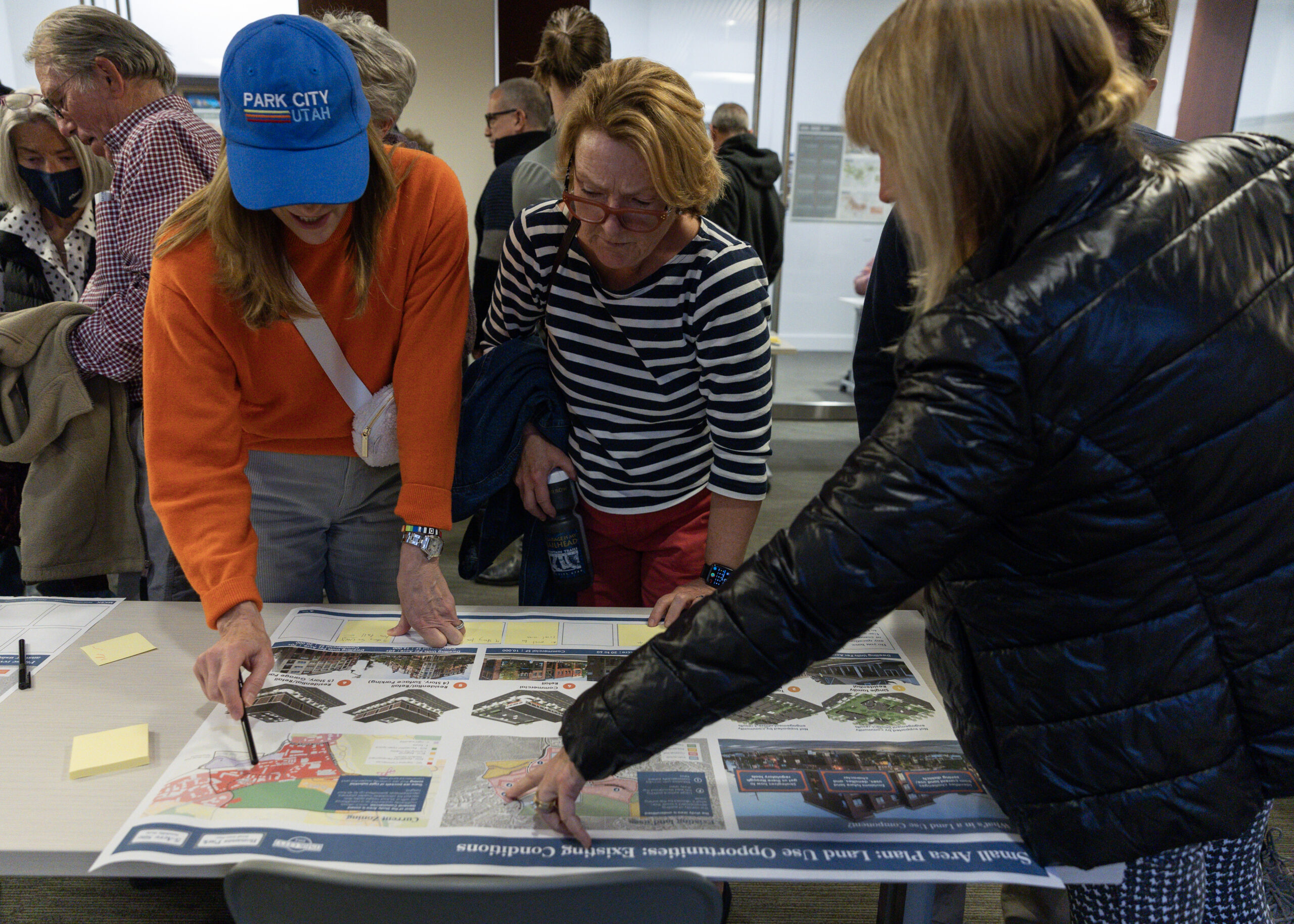
Working as part of a broader planning team with MKSK, Development Strategies helped translate the community’s vision into market, economic, and feasibility terms. Our work provided market research, economic strategy, and detailed feasibility modeling for the city-owned site, helping decision-makers understand the real trade-offs among different development options.
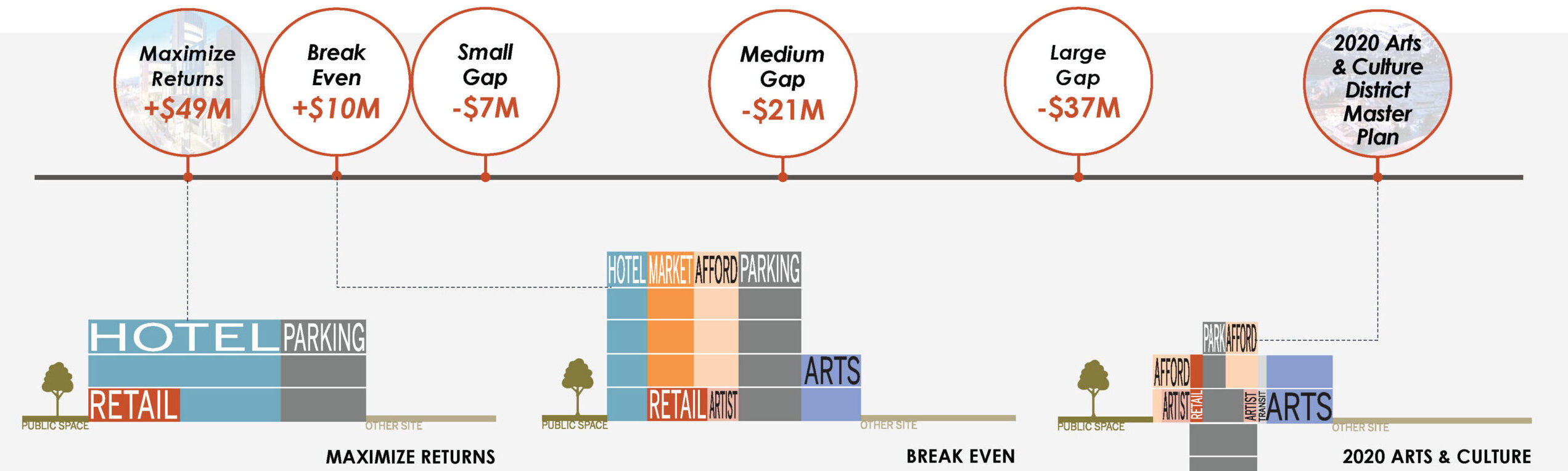
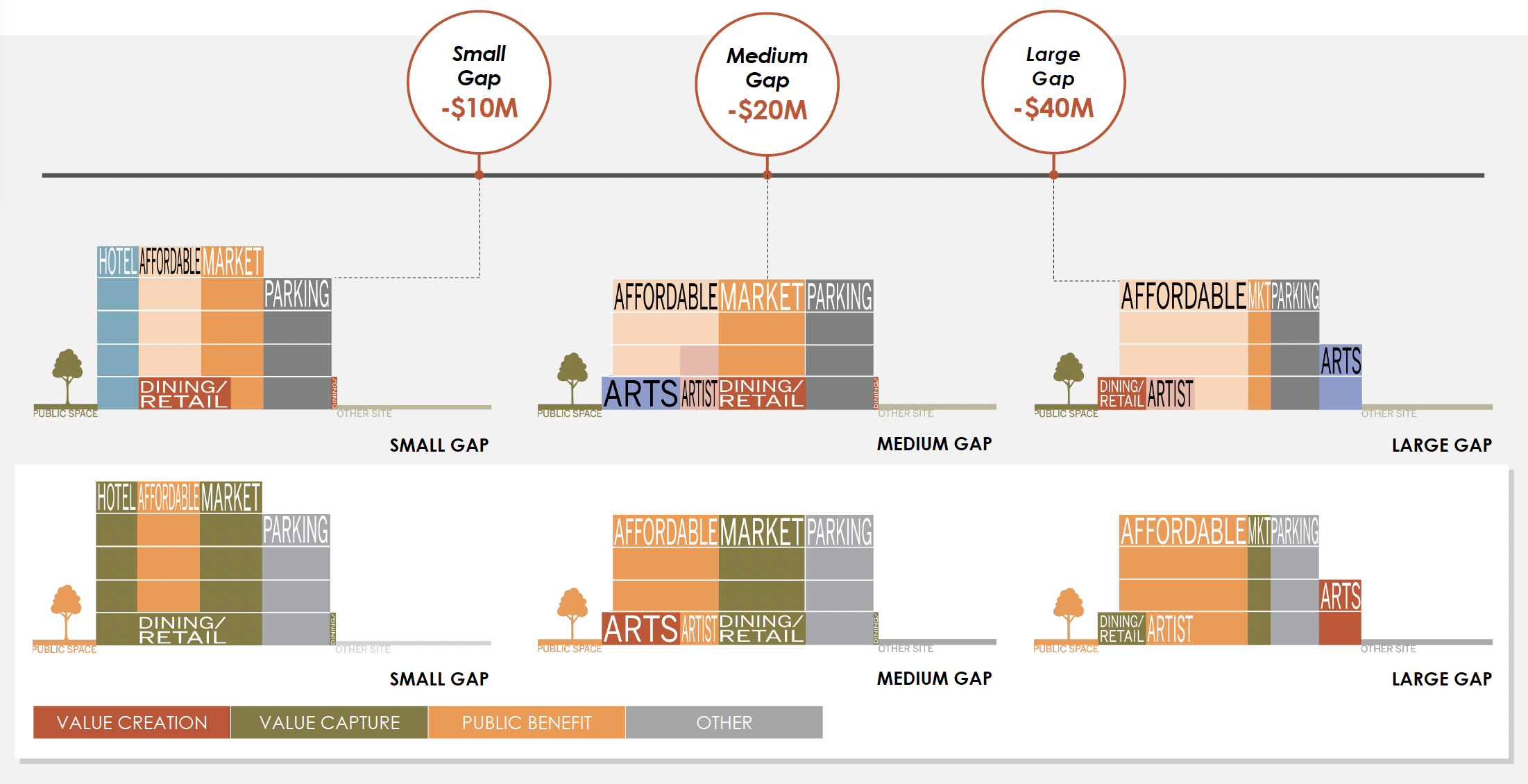
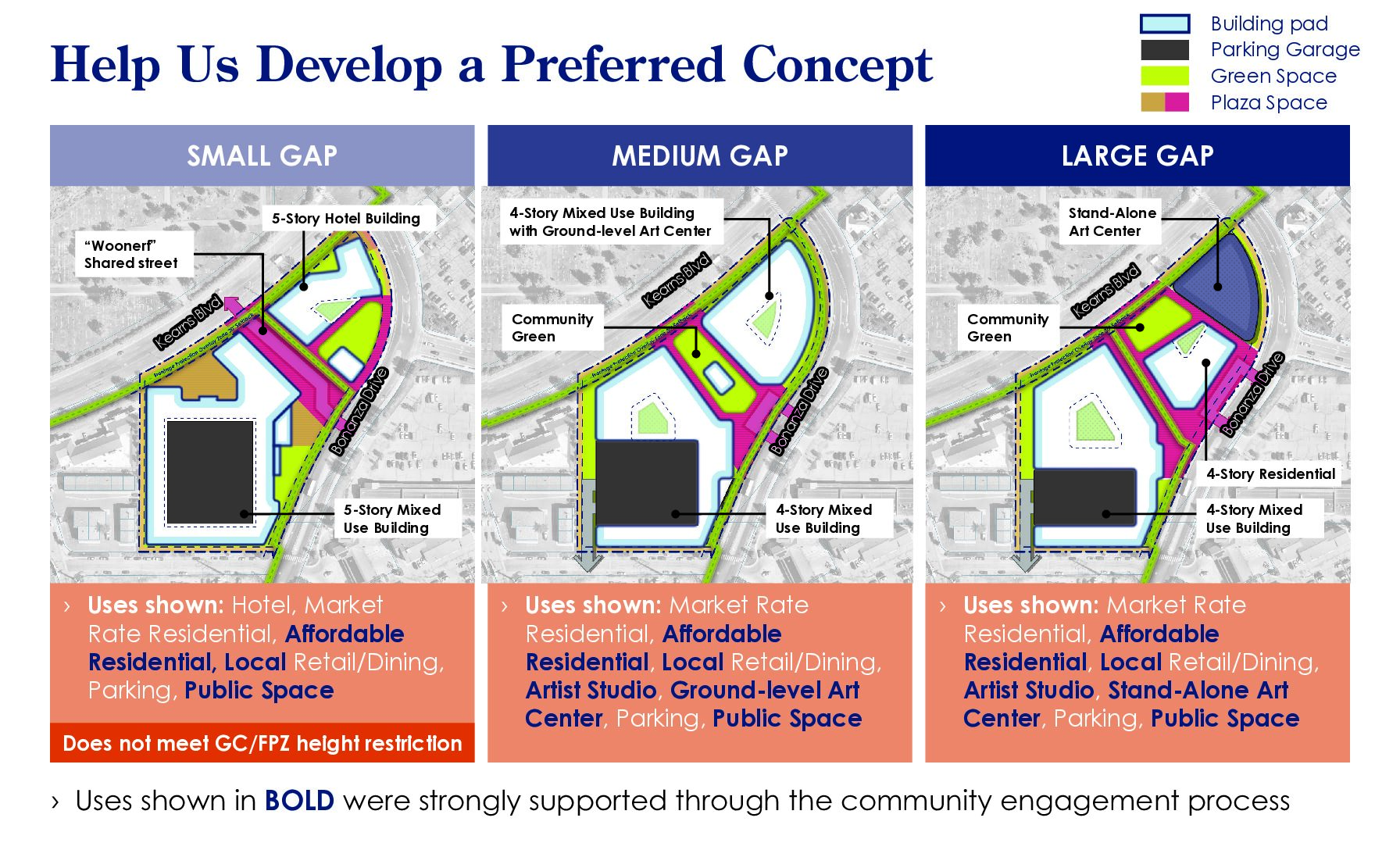
The approach centered on equipping decision-makers with a transparent framework that mapped the financial implications of various programming options. We analyzed how different mixes of market-rate development, public spaces, and affordable artist housing would affect the project’s bottom line. By visualizing these trade-offs across low-, medium-, and high-gap scenarios, we demonstrated both the potential for market-rate investment and the reality that achieving the city’s ambitious community benefits would require targeted public gap financing and a broader district-wide strategy.
After completing the initial planning and development strategy, Park City retained Development Strategies to help prepare and issue a developer RFP for the site. The city subsequently selected a preferred developer and advanced a preferred development plan supported by a structured public-private partnership. Under the emerging partnership framework, the developer would deliver the vertical development, while the city would contribute public resources to support affordability, high-quality public space, structured parking, and other elements necessary to make the project feasible.
More Projects